
Yves Friedrich · 12 September 2026
The Interconnected Effects of Platform Migration on Visibility Metrics in Niche Digital Services
Platform migration in niche digital services involves shifting operations from one hosting environment, content management system, or cloud provider to another, and observers note that this process directly influences multiple visibility metrics at once. Researchers have documented how changes in server infrastructure, URL structures, and technical configurations alter search engine indexing rates, organic traffic volumes, and referral patterns simultaneously. Data from industry analyses indicate that even minor alterations during migration can trigger cascading adjustments across interconnected systems, where a drop in page speed affects both bounce rates and search rankings in sequence.
Core Components of Platform Migration
Experts define platform migration as the relocation of digital assets including databases, user accounts, and content libraries while maintaining service continuity. Those who study these transitions report that niche services, such as specialized forums or targeted SaaS tools, often migrate to improve scalability or comply with evolving data regulations. Figures from recent audits reveal that migrations completed between 2024 and 2025 frequently coincided with temporary visibility fluctuations lasting four to eight weeks, depending on the thoroughness of pre-launch testing. And because these services operate in narrow markets, any visibility shift tends to stand out more sharply against baseline performance levels.
Effects on Search Engine Visibility
Search visibility metrics respond quickly to migration events because crawlers detect alterations in site architecture, canonical tags, and sitemap submissions. Studies compiled by academic institutions show that incomplete redirects during migration lead to indexation gaps, reducing the number of pages appearing in results for targeted queries. Observers note that niche digital services relying on long-tail keywords experience sharper declines when domain authority signals weaken temporarily, and this occurs even when overall domain strength remains stable. In September 2026, scheduled updates to cross-border data handling standards are projected to prompt additional migrations, which could amplify these patterns across regions following similar regulatory timelines.
Shifts in Traffic and Referral Metrics
Traffic sources beyond organic search also register changes after migration, as social sharing links, email campaigns, and partner referrals may point to outdated endpoints. Research indicates that services with fragmented link profiles across multiple platforms see referral traffic recover more slowly than those with centralized tracking setups. Data shows a typical pattern where direct traffic dips first, followed by adjustments in session duration as users adapt to new navigation flows. Those tracking these metrics over time find that the interconnections become clear when reduced visibility in one channel feeds into lower engagement signals that search algorithms then interpret as quality declines.
Interconnections Across Visibility Indicators
Visibility metrics rarely operate in isolation, and platform migration highlights these links through simultaneous movements in rankings, impressions, and user behavior data. A decline in mobile page speed, for instance, often correlates with higher exit rates that subsequently influence search result placements. Analysts have observed that niche services experience this cycle more acutely because smaller audiences provide fewer compensatory signals to offset negative trends. What's interesting is how a single technical fix, such as optimized caching rules, can restore multiple metrics together rather than requiring separate interventions for each one.
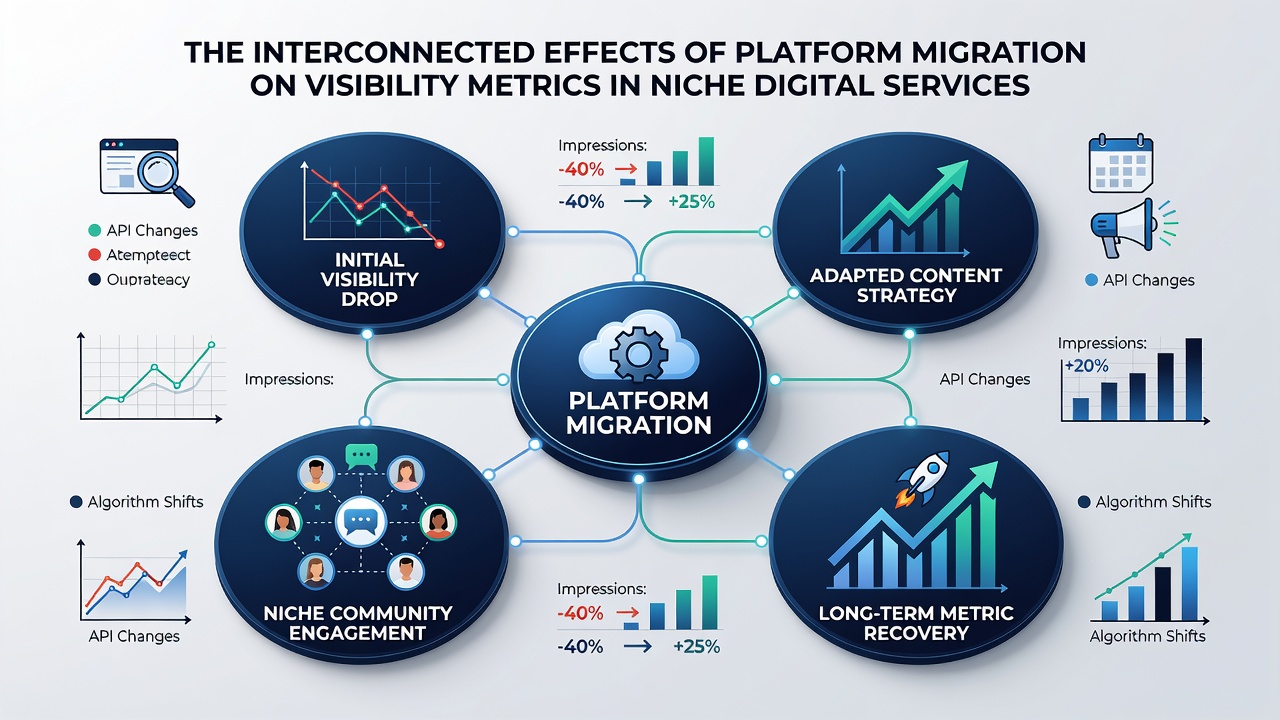
Further connections appear when analytics platforms report mismatched data between pre- and post-migration periods, prompting adjustments in how visibility is measured. Reports from the OECD highlight that digital service providers in multiple countries face similar measurement challenges when migrating across cloud regions with differing privacy frameworks. Meanwhile, evidence from North American research centers suggests that services maintaining parallel tracking implementations during transition periods preserve more accurate visibility baselines for comparison.
Recovery Patterns and Measurement Adjustments
Recovery trajectories vary based on the scale of the migration and the preparedness of technical teams, with some services regaining prior visibility levels within six weeks while others require extended monitoring. Those who monitor these cases note that consistent use of log file analysis helps identify indexing delays before they compound into broader metric disruptions. Data from European digital economy assessments indicate that services incorporating structured data markup during migration see faster restoration of rich result appearances in search interfaces. And because niche audiences often cluster around specific platforms, coordinated outreach after migration can accelerate the return of referral visibility alongside organic gains.
Conclusion
Platform migration produces interconnected effects on visibility metrics that extend across search rankings, traffic composition, and engagement signals in niche digital services. Researchers continue to document these patterns through longitudinal tracking, and the evidence points to the value of integrated testing protocols that address multiple metric categories at once. As regulatory timelines advance into 2026, additional migrations are expected to provide further data on how these interconnections evolve under changing technical and compliance conditions.